Chicago Metro · 16 towns covered
Smart Home Wiring in the Chicago suburbs
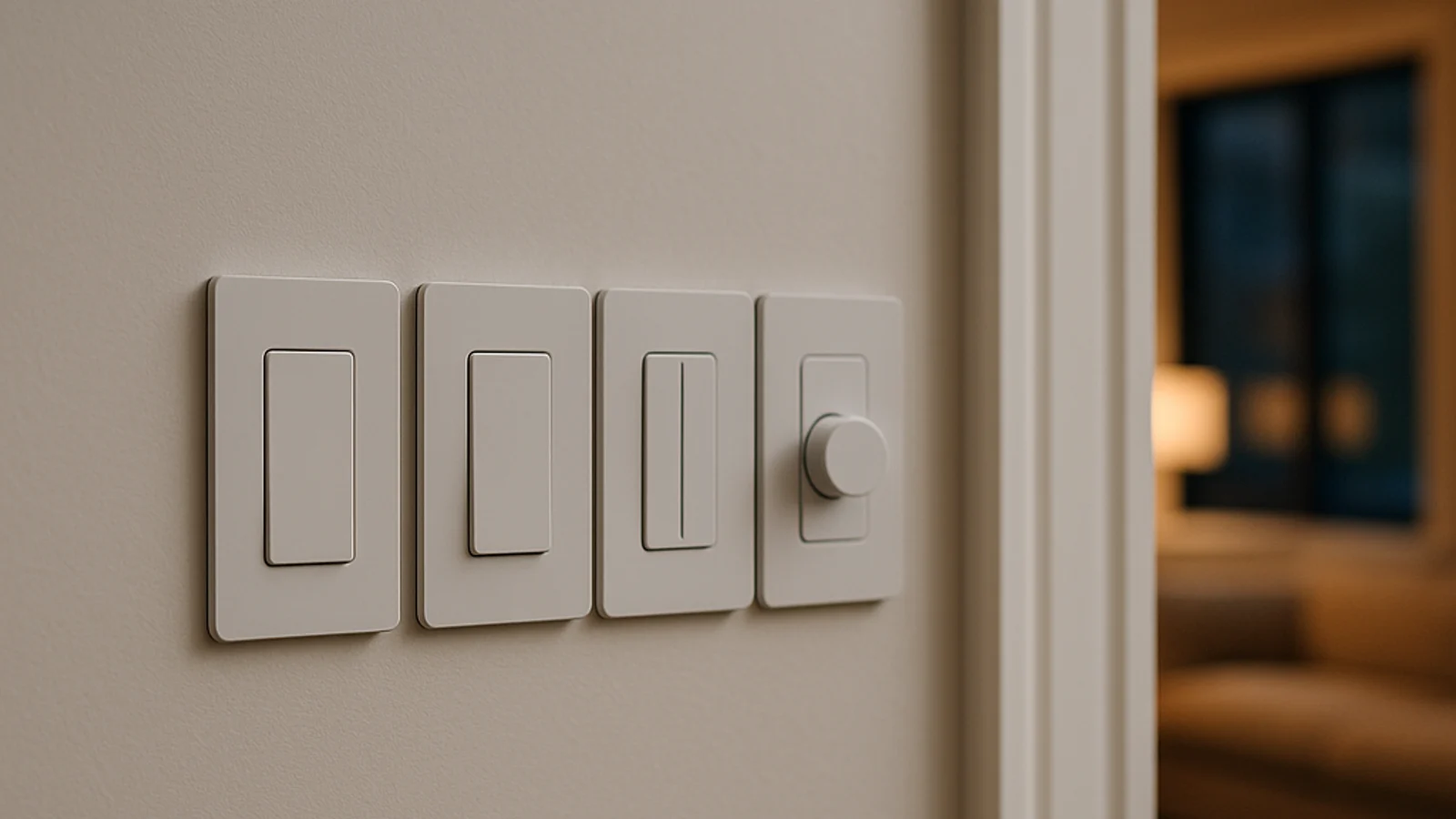
Most smart home projects fail on the same detail: the switch box has no neutral conductor. Homes wired before the mid-1980s routinely ran switch loops without one, and nearly every smart switch needs it. That single constraint decides whether a smart lighting project is an afternoon of swapping devices or a wiring job.
- $450 – $6,000 depending on scope typical across the metro
- Licensed, insured contractors
- Northwest suburbs & Fox Valley
- 16 towns covered
KilowattBros is a free matching service. All electrical work is performed by independent, licensed contractors.
Licensed & insured
Work is carried out by licensed, insured electrical contractors — never by us.
Fast hand-off
Your request reaches a contractor the moment you submit it, not a queue.
One contractor
Not a shared lead resold to five companies who all call you at once.
Free, no obligation
Matching costs you nothing. Contractors pay us, and only after you book.
Home Automation & Smart Home Wiring in the Chicago suburbs: the short answer
- Typical cost
- $450 – $6,000 depending on scope
- Home Automation & Smart Home Wiring in the Chicago suburbs typically costs $450 – $6,000 depending on scope. The figure depends on your home's existing wiring and access.
- How long it takes
- A day for device-level work
- A day for device-level work; a week or more for structured wiring. Permit review and inspection scheduling usually set the calendar timeline rather than the electrician's availability.
- Permit required
- Usually not
- Home Automation & Smart Home Wiring on existing equipment generally does not require a permit. Adding a circuit or replacing service equipment does.
Figures are typical ranges for planning, not a quote. Only a licensed electrician who has seen the job can price it.
Cost
What home automation wiring costs around Chicago
These are Illinois figures, not national averages. Labour and permit costs in the Chicago metro run above the national median, and a page quoting a US-wide number will consistently under-estimate what you are actually quoted here.
| Scope of work | Typical range | What moves the price |
|---|---|---|
| Smart switch installation where a neutral is presentLabour only. Straightforward device swap. | $85 – $160 per switch | Labour only. Straightforward device swap. |
| Adding a neutral to an existing switch boxThe variable that decides most smart lighting budgets. | $180 – $450 per box | The variable that decides most smart lighting budgets. |
| Smart panel or whole-home lighting controlLutron RA3, Control4, and similar systems. | $2,500 – $12,000 | Lutron RA3, Control4, and similar systems. |
| Structured wiring for a new build or gut remodelCat6 drops, central rack, and coax to every room. | $3,000 – $9,000 | Cat6 drops, central rack, and coax to every room. |
| Hardwired network access points, per dropThe genuine fix for suburban Wi-Fi dead spots. | $250 – $500 | The genuine fix for suburban Wi-Fi dead spots. |
| Smart doorbell, camera, or lock, per deviceHigher where no existing low-voltage transformer is present. | $150 – $400 | Higher where no existing low-voltage transformer is present. |
| Whole-home surge protectionNow required at the service under NEC 230.67 anyway. | $300 – $700 | Now required at the service under NEC 230.67 anyway. |
Ranges reflect typical Chicago-area pricing and are for planning only — they are not a quote. Actual cost depends on your home, your existing wiring, and the permit requirements in your municipality. Only a licensed electrician who has seen the job can price it.
Do you actually need this?
Signs it is time for home automation wiring
None of these on their own proves you need work done. Several together usually does. If you recognise two or more, it is worth having a licensed electrician look before it becomes an emergency call.
- Smart switches you bought will not work — no neutral in the box
- Wi-Fi drops out in the same rooms every time
- Three-way switches behave unpredictably after a smart swap
- A remodel or addition is the moment to run wire inside open walls
- Outdoor cameras or a doorbell have no power source nearby
- Sensitive electronics have already been lost to a surge
What a proper job includes
What to expect from a home automation wiring
Use this as a checklist when you compare quotes. A quote that is noticeably cheaper than the others is usually missing something on this list — most often the permit, the inspection, or the grounding.
- Timeline
- A day for device-level work; a week or more for structured wiring
- Permit
- Usually not required
- 01Survey of switch boxes to confirm which have neutrals available
- 02Neutral runs pulled where smart control is wanted and none exists
- 03Load, dimmer compatibility, and neutral requirements checked per fixture type
- 04Three-way and multi-location circuits reconfigured correctly
- 05Structured wiring: Cat6 drops, central rack, and terminated patch panel
- 06Hardwired access points placed for coverage rather than convenience
- 07Whole-home surge protection at the panel
- 08Scenes, schedules, and app setup handed over working, not half-configured
Permits & code
What the rules actually require
Swapping devices on existing circuits does not generally require a permit. Adding circuits, running new conductors to bring a neutral into switch boxes, or installing a lighting control panel does. Low-voltage structured wiring rules vary by village — some require a separate low-voltage permit, some do not.
NEC 404.2(C) has required a neutral at most switch locations since the 2011 cycle, which is why newer homes take smart switches without complaint and 1970s homes frequently do not. In an older house the honest quote prices the neutral runs, not just the devices.
Dimmer compatibility with LED fixtures is a genuine engineering constraint, not a preference. An incompatible dimmer-and-driver pairing produces flicker and audible buzz that no configuration will fix — the fixture, the driver, and the dimmer have to be matched.
Wi-Fi mesh is a workaround for a wiring problem. In houses with plaster-and-lath walls or foil-backed insulation — common across older Elgin and St. Charles housing — hardwired access points are the only reliable fix, and running the cable during any other wall-opening work costs a fraction of doing it later.
Pick your town for local detail
Home Automation & Smart Home Wiring by town
16 towns across the northwest suburbs and Fox Valley. Each town page covers smart home alongside its own permit authority, utility and housing history — because a 1962 Streamwood ranch and a 2003 Huntley build have almost nothing in common electrically.
- ElginKane County
- South ElginKane County
- StreamwoodCook County
- CarpentersvilleKane County
- West DundeeKane County
- BartlettCook County
- Hanover ParkCook County
- Hoffman EstatesCook County
- St. CharlesKane County
- AlgonquinMcHenry County
- SchaumburgCook County
- GenevaKane County
- HuntleyMcHenry County
- BataviaKane County
- AuroraKane County
- NapervilleDuPage County
FAQ
Home Automation & Smart Home Wiring — questions
Why do my smart switches need a neutral wire?
A smart switch has to stay powered continuously so it can listen for commands even when the light is off. A conventional switch only interrupts the hot conductor and needs no return path. Without a neutral in the box the switch has no way to keep itself energised. Some no-neutral models exist, but they can flicker with LED loads and do not work in every configuration.
Can an electrician add a neutral to my switch box?
Usually, at $180 to $450 per box depending on access. If the box sits below an accessible attic or above an open basement it is straightforward. Mid-wall boxes on a middle floor with finished surfaces both sides are the expensive case, and sometimes a no-neutral device or a smart bulb is genuinely the better answer.
Is it worth wiring Ethernet in an existing house?
For anything that stays put — TVs, desktops, access points, cameras — yes. Hardwired drops end the buffering and dropout problems that mesh systems only partially mask, and in houses with plaster walls or foil-backed insulation they are the only real fix. Budget $250 to $500 per drop in a finished home, far less during a remodel with walls open.
What is structured wiring?
A central rack or enclosure with home-run Cat6 and coax to every room, rather than daisy-chained cable and a router shoved in a closet. It costs $3,000 to $9,000 during construction or a gut remodel and is the single cheapest thing to do while walls are open — retrofitting the same wiring later can cost several times as much.
Do I need a permit for smart home wiring?
Swapping devices on existing circuits generally does not require one. Running new conductors, adding circuits, or installing a lighting control panel does. Low-voltage and network cabling rules vary by village — some require a separate low-voltage permit and some do not, so it is worth confirming with your building department.
Why do my LED lights flicker on a dimmer?
Almost always a compatibility mismatch between the dimmer and the LED driver. Older dimmers were designed for the steady resistive load of an incandescent bulb, and an LED draws a fraction of that. The fix is a dimmer rated for LED loads and matched to the specific fixture, not a different bulb brand.
Should I run wiring during a remodel even if I am not ready for smart devices?
Yes. Cable in an open wall is inexpensive; the same cable in a finished wall is a labour project with drywall repair attached. Pulling neutrals to switch locations and Cat6 to a few key rooms during any other wall-opening work is the highest-return decision in this category, whether or not you install anything on it that year.
Next step
Get matched with a licensed electrician
One short form. It goes straight to a licensed, insured contractor who works in your area — not into a national lead pool that resells it to five companies.
Or call +1 (727) 477-1356KilowattBros is a free matching service. All electrical work is performed by independent, licensed contractors.