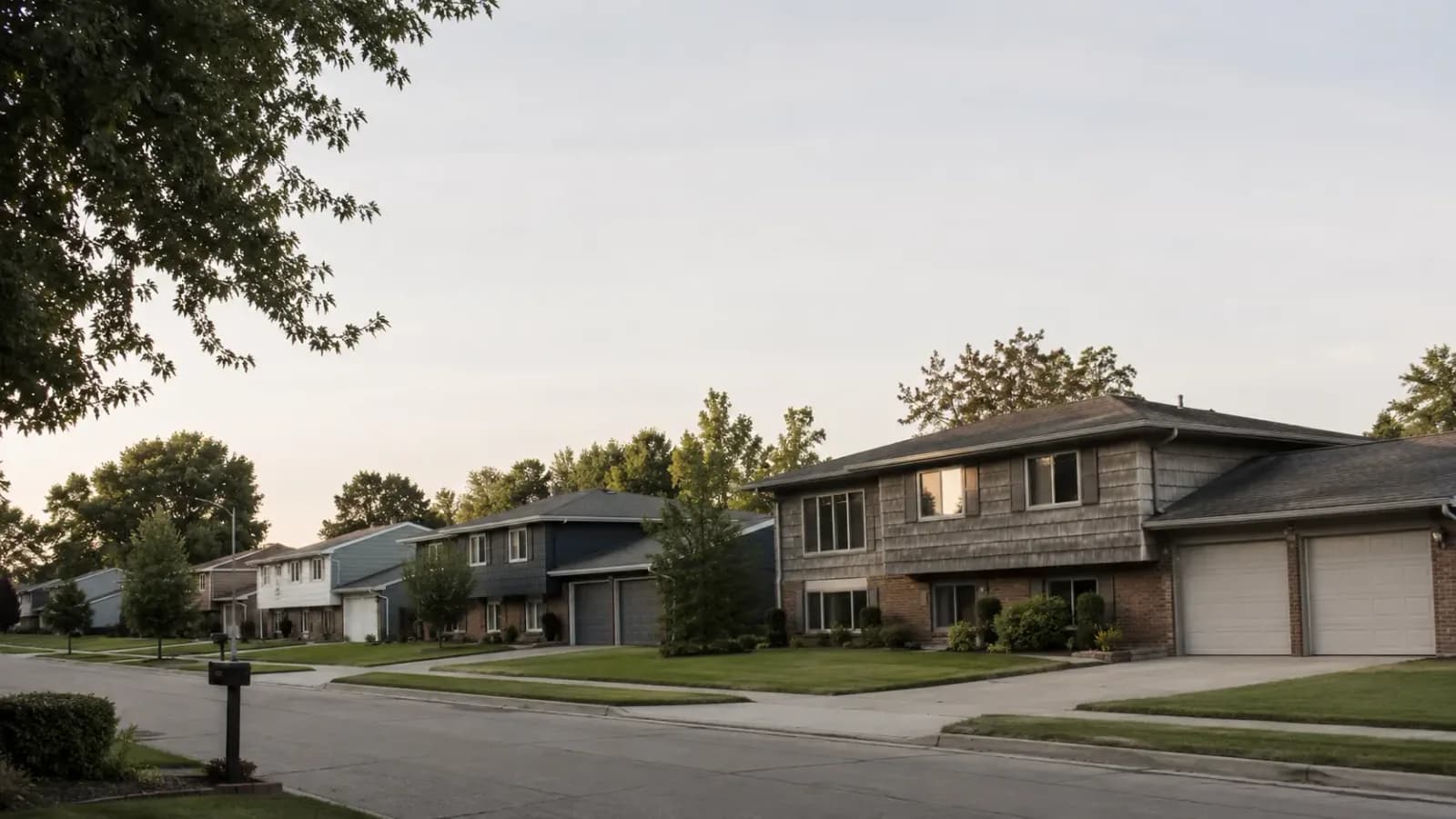
Cook County · 78,723 residents
Schaumburg electricians — licensed, insured, matched to your job
Schaumburg went from a farming township to one of the largest villages in Illinois in about two decades, and the Weathersfield development that drove much of that growth was built on a scale and a timetable that left thousands of homes sharing one wiring vintage. Those houses are now fifty to sixty-five years old, which is precisely when original service equipment starts producing symptoms — nuisance trips, warm panel covers, and breakers that no longer reset cleanly.
- Serving all 4 Schaumburg ZIP codes
- ComEd
- Permits through Village of Schaumburg
- 12 miles from our partner electrician
KilowattBros is a free matching service. All electrical work is performed by independent, licensed contractors.
Licensed & insured
Work is carried out by licensed, insured electrical contractors — never by us.
Fast hand-off
Your request reaches a contractor the moment you submit it, not a queue.
One contractor
Not a shared lead resold to five companies who all call you at once.
Free, no obligation
Matching costs you nothing. Contractors pay us, and only after you book.
What the housing stock needs
Schaumburg homes, by the year they were built
Schaumburg went from a farming township to one of the largest villages in Illinois in about two decades, and the Weathersfield development that drove much of that growth was built on a scale and a timetable that left thousands of homes sharing one wiring vintage. Those houses are now fifty to sixty-five years old, which is precisely when original service equipment starts producing symptoms — nuisance trips, warm panel covers, and breakers that no longer reset cleanly. It is also the largest municipality in this service area at nearly 79,000 residents, so the volume of that same job repeating across the village is considerable.
- Weathersfield and the original boom1959–1978Most of Schaumburg
- The defining era. Large-scale tract building with services and panels sized to late-1950s and 1960s assumptions, and aluminium branch wiring in the later homes.
- Later development1985–2005
- Modern grounded construction, including substantial townhome and condominium stock.
Neighbourhoods and subdivisions we cover
Weathersfield, Timbercrest, Lakewood, Town Square, Sheffield Manor — and everywhere else in the 4 Schaumburg ZIP codes.
Ordered by what Schaumburg needs most
Electrical work we arrange in Schaumburg
Schaumburg was largely built in the aluminium branch-wiring years, so this list leads with connection integrity and panel condition. The distinction between remediating connections and rewiring a house is worth thousands here.
Electrical Panel Upgrade
Panels from this period are often obsolete brands, and many services sized for a 1972 load are now full. Worth assessing before adding anything.
- Typical
- $2,200 – $4,800
- Permit
- Required
- Duration
- One day for a standard swap; two if the mast and grounding are replaced
Emergency Electrician
Aluminium branch wiring loosens at terminations as it cycles hot and cold. Warm switch plates and intermittent circuits are the early symptoms; scorched devices are the late ones.
- Typical
- $150 – $450 for the call-out and diagnosis
- Permit
- Usually not
- Duration
- Most emergency diagnostics resolve within one to three hours on site
EV Charger Installation
Check the branch wiring before the panel. A charger circuit is new copper regardless, but any aluminium it lands beside deserves attention at the same visit.
- Typical
- $700 – $2,200 installed
- Permit
- Required
- Duration
- Half a day for a standard attached-garage install
Whole House Rewiring
The most over-quoted job in the trade. Aluminium remediation at the connections runs $2,500–$8,000; a full rewire is rarely necessary and frequently quoted.
- Typical
- $8,000 – $30,000+
- Permit
- Required
- Duration
- One to three weeks depending on size, access, and occupancy
Whole House Generator Installation
Split-level lots usually take a pad without difficulty, and the transfer switch is a clean install where the service is being touched anyway.
- Typical
- $6,500 – $16,000 installed
- Permit
- Required
- Duration
- Two to three days on site, plus lead time for permits and the gas meter
Home Automation & Smart Home Wiring
Possible, but every device landing on aluminium branch wiring needs the correct connector — this is not a swap-and-go retrofit here.
- Typical
- $450 – $6,000 depending on scope
- Permit
- Usually not
- Duration
- A day for device-level work; a week or more for structured wiring
Permits & utility
Who signs off on work in Schaumburg
Illinois licenses electrical contractors at the municipal level, not the state level. That means the rules, the fees and the inspection queue are Schaumburg’s — not Cook County’s, and not Illinois’.
- Permit authority
- Village of Schaumburg — Community Development, Building Division
- Electric utility
- ComEd
- Gas utility
- Nicor Gas
- County
- Cook
- ZIP codes
- 60193, 60194, 60195, 60173
- Population
- 78,723
Report a power outage
1-800-334-7661ComEd
Also reachable as 1-800-EDISON-1. You can report by text: send OUT to 26633.
This is the utility, not us — we cannot restore power. If you smell burning or see a downed line, call them first.
- The Weathersfield development drove Schaumburg's transformation from farm township to major suburb starting in 1959, leaving thousands of homes with a shared late-1950s to 1970s wiring vintage.
- At nearly 79,000 residents Schaumburg is the largest municipality in this service area.
- Homes from the later part of the original boom fall inside the aluminium branch wiring era, where connector remediation is the accepted fix.
Local context
What makes Schaumburg homes different
Schaumburg went from a farming township to one of the largest villages in Illinois in about two decades, and the Weathersfield development that drove much of that growth was built on a scale and a timetable that left thousands of homes sharing one wiring vintage. Those houses are now fifty to sixty-five years old, which is precisely when original service equipment starts producing symptoms — nuisance trips, warm panel covers, and breakers that no longer reset cleanly. It is also the largest municipality in this service area at nearly 79,000 residents, so the volume of that same job repeating across the village is considerable.
Schaumburg housing by era
Weathersfield and the original boom
1959–1978The defining era. Large-scale tract building with services and panels sized to late-1950s and 1960s assumptions, and aluminium branch wiring in the later homes.
Later development
1985–2005Modern grounded construction, including substantial townhome and condominium stock.
Schaumburg at a glance
- County
- Cook
- Population
- 78,723
- ZIP codes
- 60193, 60194, 60195, 60173
- Electric utility
- ComEd
- Gas utility
- Nicor Gas
- Permits issued by
- Village of Schaumburg — Community Development, Building Division
Areas we cover
Weathersfield · Timbercrest · Lakewood · Town Square · Sheffield Manor
- The Weathersfield development drove Schaumburg's transformation from farm township to major suburb starting in 1959, leaving thousands of homes with a shared late-1950s to 1970s wiring vintage.
- At nearly 79,000 residents Schaumburg is the largest municipality in this service area.
- Homes from the later part of the original boom fall inside the aluminium branch wiring era, where connector remediation is the accepted fix.
One town, one wiring vintage
Schaumburg is unusual in this service area, and the reason is historical rather than electrical.
Most suburbs accumulated their housing gradually — a bit of pre-war stock, some post-war infill, subdivisions added over decades. Schaumburg did not. It went from a farming township to one of the largest villages in Illinois in roughly two decades, and the Weathersfield development that drove most of that growth was built on a scale and a timetable that left thousands of homes sharing one wiring vintage.
Those houses went up between about 1959 and 1978. They are now fifty to sixty-five years old, which is precisely the age at which original service equipment starts producing symptoms rather than sitting quietly.
At nearly 79,000 residents, Schaumburg is the largest municipality we cover. The practical effect is that the same job repeats across the village at considerable volume — and that your neighbour's electrical problem is a reasonable predictor of your own.
The aluminium question
Homes from the later part of the original boom — roughly 1965 to 1974 — fall inside the aluminium branch wiring era, and this deserves a clear answer because it is the most over-quoted situation in residential electrical work.
Aluminium branch wiring does not fail along the run. It fails at the connections. Aluminium expands and contracts more than copper as a circuit heats and cools, and over decades of cycling, terminations at switches, outlets and fixtures gradually work loose. A loose termination has resistance. Resistance generates heat. That is the whole mechanism.
The accepted remedy is remediating every device connection with connectors rated for the purpose — done properly, roughly $2,500 to $8,000 depending on how many devices the house contains.
A whole-house rewire, by contrast, starts around $8,000 and runs well past $30,000. It is quoted for this situation far more often than it is justified.
If somebody has told you your Weathersfield house needs rewiring because it has aluminium, that is a claim worth testing with a second opinion.
The symptoms that matter
- Warm switch plates or outlet covers. The classic sign of a loose termination. Worth acting on soon, though not tonight.
- Flickering confined to one circuit. Points at a specific connection rather than at the service.
- A burning or hot-plastic smell. Different category entirely. Treat as urgent.
- Breakers that trip and will not reset cleanly. The breaker is doing its job; repeatedly resetting it removes the protection without addressing anything.
Panels of this vintage
The other consequence of a town built to one timetable is that the panels are of one generation too.
Equipment installed in the 1959–1978 window was sized against the assumptions of its decade: no central air in many cases, no EV, no induction range, no finished basement with its own circuits, no home office. A house that has had all of those added over sixty years is running a 2020s load profile through 1960s infrastructure.
Two distinct problems come out of that, and they cost very different amounts:
The service is undersized. A 100-amp service supporting a modernised house is genuinely at its limit, and the fix is a replacement — roughly $2,200 to $4,800 for a 200-amp service.
The panel is merely full. The service is adequate but every breaker position is occupied. A sub-panel adds positions without touching the service entrance or the utility, typically $900 to $2,000.
Ask which one you have. It is a $3,000 question and it has a definite answer.
Some panels from this period are also obsolete brands — Federal Pacific Stab-Lok and Zinsco equipment is known to fail to trip under fault conditions. That is not a capacity question, it is a replacement question, and insurers increasingly ask about it directly.
The newer part of the village
Schaumburg's later development — roughly 1985 to 2005, including substantial townhome and condominium stock around Town Square and elsewhere — is modern grounded construction and carries none of the above.
For those homes the work is additive rather than corrective: EV charging, a generator, circuits for a finished space, smart switches. Townhomes and condos bring their own constraint, which is that shared walls, association rules and limited panel locations narrow the options. Worth raising early rather than discovering at the quote.
Generators and the outage profile
Worth a note because it comes up often here. Schaumburg's original boom-era neighbourhoods largely have overhead distribution, which means outages tend to be more frequent but shorter — a line comes down in a storm and is restored within hours. The later developments, like most construction after the mid 1980s, are on underground distribution: fewer outages, but longer ones when a fault does occur, because locating and excavating a buried fault takes substantially more time than restringing a conductor.
That difference genuinely changes the case for standby power. A whole-house standby generator runs roughly $6,500 to $16,000 installed, and it is a much easier argument to make for a household that loses power twice a winter for eighteen hours than for one that loses it five times for ninety minutes.
A transfer switch is a permitted job either way, and it is usually cheapest to install alongside a panel replacement while the service equipment is already open.
Permits and utility
Electrical permits go through the Village of Schaumburg — Community Development, Building Division at 101 Schaumburg Court. Anything that adds a circuit or replaces service equipment needs a permit and an inspection.
Schaumburg is in ComEd territory, so a service disconnect for a panel replacement is scheduled with ComEd. That distinguishes it from the Fox Valley towns ten miles west — St. Charles, Geneva and Batavia all run their own municipal utilities — which is a routine source of confusion for contractors working across both areas.
What we do
KilowattBros is a free matching service, not an electrical contractor. We do not perform electrical work, provide estimates, or supervise projects. Your request goes to one licensed, insured electrician covering Schaumburg — not to five companies who will all call you at once. Homeowners pay nothing; the contractor pays us when a request becomes booked work.
Before you get a quote
Costs and comparisons for Schaumburg homeowners
Ordered by what Schaumburg housing actually needs. Illinois figures, not national averages.
- Guide
Electrical Panel Upgrade Cost in Illinois
Real Illinois pricing for a 100 to 200 amp panel upgrade, what drives the number up, and how to read a quote. Chicago-area figures, not national averages.
Read it - Comparison
100 vs 200 Amp Panel: Which Do You Actually Need?
The honest answer depends on what you burn gas for. Here is how to work it out before anyone quotes you.
Read it - Guide
Emergency Electrician Cost in Illinois
What an after-hours call-out costs in the Chicago suburbs, which faults genuinely cannot wait until Monday, and what to switch off before anyone arrives.
Read it - Guide
EV Charger Installation Cost in Illinois
Level 2 home charger pricing for the Chicago suburbs, why the run to your panel matters more than the charger, and when you can avoid a panel upgrade.
Read it
FAQ
Electrical work in Schaumburg — questions
Do I need a permit for electrical work in Schaumburg?
For anything that replaces service equipment or adds a circuit — a panel replacement, an EV charger, a generator transfer switch — yes, and an inspection with it. Permits in Schaumburg go through Village of Schaumburg — Community Development, Building Division. Straightforward repairs to existing devices generally do not need one. Skipping a permit tends to surface at resale or during an insurance claim, which is the expensive way to find out.
Does ComEd serve Schaumburg?
Yes. Schaumburg is in ComEd territory, so a service upgrade that needs the meter pulled is scheduled through ComEd. Worth knowing that four towns nearby — St. Charles, Geneva, Batavia and Naperville — run their own municipal utilities instead, which catches out contractors working across the Fox Valley.
What electrical work do Schaumburg homes usually need?
Most of Schaumburg's housing dates from the 1959–1978 period. The defining era. Large-scale tract building with services and panels sized to late-1950s and 1960s assumptions, and aluminium branch wiring in the later homes. That is the pattern here, though any individual house can differ — the year on the deed predicts the problem better than the size or the price does.
How fast can an electrician get to Schaumburg?
Schaumburg is about 12 miles from our partner electrician's base in Elgin, so same-day is realistic for emergencies and same-hour is often possible during business hours. Scheduled work runs days to weeks out, with permit review usually setting the timeline rather than the electrician's diary.
Is KilowattBros an electrical contractor?
No. We are a free matching service and we do not perform electrical work, provide estimates, or supervise projects. Your request goes to one licensed, insured contractor who covers Schaumburg — not to five companies who will all call you. Licensing, pricing, scheduling, warranty and workmanship are entirely the contractor's.
How do I check an electrician is licensed in Schaumburg?
Ask for the license number and a certificate of insurance before any work starts — you are entitled to both, and hesitation is informative. Because Illinois licenses electrical contractors municipally, verification runs through Village of Schaumburg — Community Development, Building Division rather than a state register.
My Schaumburg house has aluminium wiring. Do I need to rewire?
Almost certainly not, and this is the most over-quoted job in the trade. Aluminium branch wiring fails at the connections, not along the runs — the metal expands and contracts as circuits heat and cool, and terminations gradually loosen. The accepted fix is remediating every device connection with the correct connectors, which runs roughly $2,500 to $8,000 depending on how many devices the house has. A full rewire is $8,000 to $30,000 and is rarely warranted for this. If you have been quoted one, get a second opinion before you get a second price.
Why do so many Schaumburg homes need the same electrical work?
Because they were built at the same time. The Weathersfield development took Schaumburg from a farming township to one of the largest villages in Illinois starting in 1959, and it was built at a scale and pace that left thousands of homes sharing one wiring vintage. Those houses are now fifty to sixty-five years old, which is precisely the age at which original service equipment starts producing symptoms. Your neighbour's panel problem is probably your panel problem.
What do warm switch plates mean?
Heat at a device almost always means a loose or oxidised termination, and in Schaumburg's late-1960s and early-1970s housing that usually points to aluminium branch wiring at the connection. It is worth acting on reasonably promptly — not an emergency in the sense of shutting off the main, but not something to leave for a year either. A burning or hot-plastic smell is a different matter and should be treated as urgent.
Coverage
Where Schaumburg sits in our service area
We cover 16 towns across the northwest suburbs and Fox Valley. Schaumburg borders Hoffman Estates, Hanover Park, Streamwood, and we cover those too.
If you are outside Schaumburg the form still works — it accepts any town, and that is how we decide where to expand next.
Next step
Get matched with an electrician in Schaumburg
One short form. It goes straight to a licensed, insured contractor who works in your area — not into a national lead pool that resells it to five companies.
Or call +1 (727) 477-1356KilowattBros is a free matching service. All electrical work is performed by independent, licensed contractors.