Service guide
Whole House Generator Installation
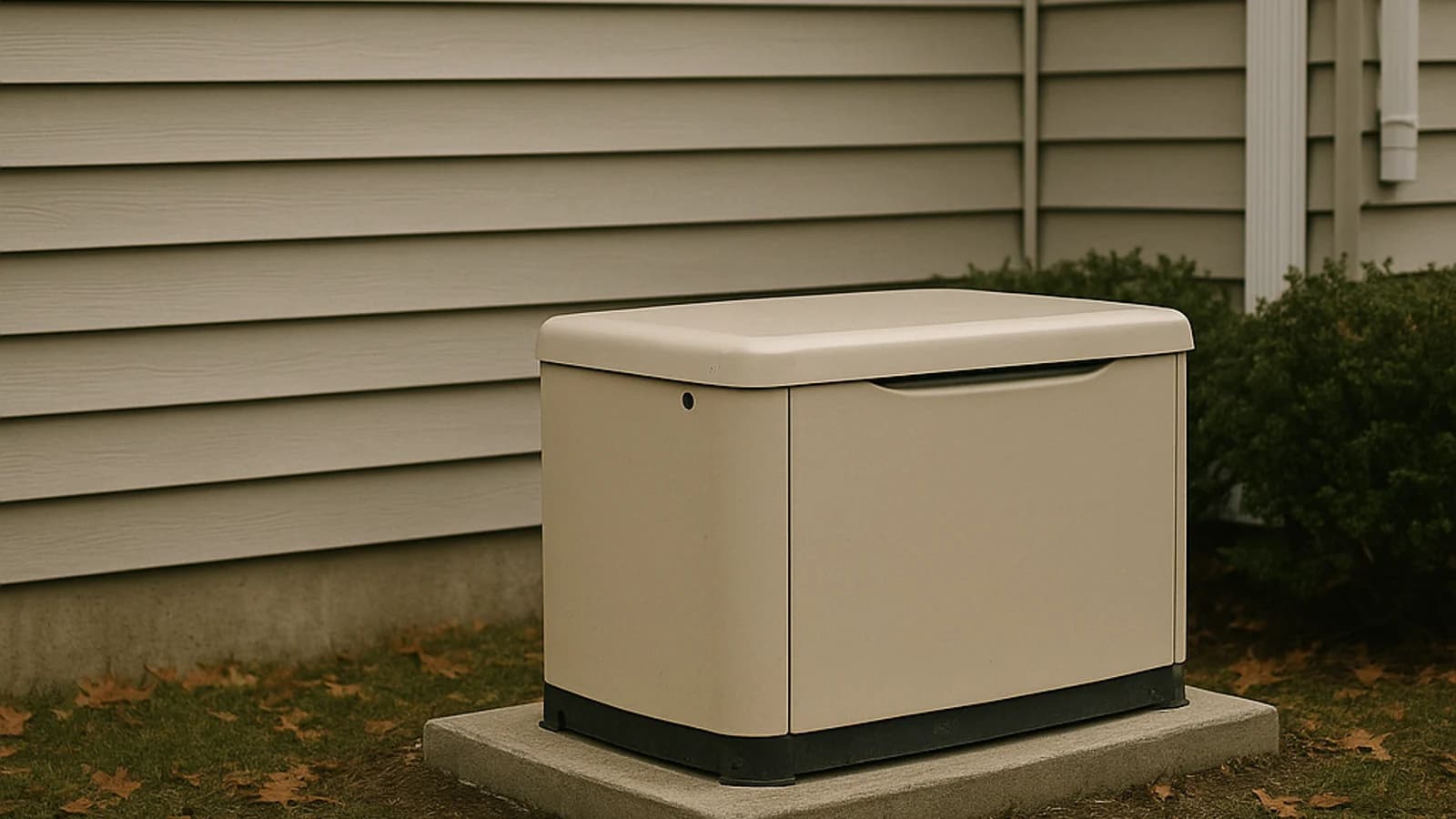
A standby generator sits on a pad outside, monitors the utility supply, and starts automatically within seconds of losing it — no cords, no fuel cans, no waking up to a flooded basement because the sump pump stopped. Where outages run long rather than merely frequent, it is the difference between an inconvenience and real damage.
- $6,500 – $16,000 installed typical
- Permit and inspection required
- Two to three days on site, plus lead time for permits and the gas meter
- Licensed, insured contractors only
KilowattBros is a free matching service. All electrical work is performed by independent, licensed contractors.
Whole House Generator Installation in the Chicago suburbs: the short answer
- Typical cost
- $6,500 – $16,000 installed
- Whole House Generator Installation in the Chicago suburbs typically costs $6,500 – $16,000 installed. The figure depends on your home's existing wiring and access.
- How long it takes
- Two to three days on site, plus lead time for permits and the gas meter
- Two to three days on site, plus lead time for permits and the gas meter. Permit review and inspection scheduling usually set the calendar timeline rather than the electrician's availability.
- Permit required
- Yes
- Whole House Generator Installation requires a permit and inspection in every municipality we cover. Your electrician normally pulls it.
Figures are typical ranges for planning, not a quote. Only a licensed electrician who has seen the job can price it.
Do you actually need this?
Signs it is time for whole house generator installation
None of these on their own proves you need work done. Several together usually does. If you recognise two or more, it is worth having a licensed electrician look before it becomes an emergency call.
- The basement has a sump pump and the yard drains toward the house
- Someone in the household depends on powered medical equipment
- The house is on a well, so an outage means no water at all
- Outages on your feeder run long rather than just frequent
- You work from home and an outage costs a day of work
- A freezer full of food has been lost to an outage before
What a proper job includes
What to expect from a whole house generator installation
Use this as a checklist when you compare quotes. A quote that is noticeably cheaper than the others is usually missing something on this list — most often the permit, the inspection, or the grounding.
- Timeline
- Two to three days on site, plus lead time for permits and the gas meter
- Permit
- Required
- 01Load study to size the unit against actual demand, not square footage
- 02Placement check against village setback and gas-meter clearance rules
- 03Pad preparation, grading, and drainage
- 04Automatic transfer switch installed at the service, interlocked with the main
- 05Gas line sizing, run, and pressure test with utility coordination
- 06Electrical and mechanical permits and inspections
- 07Commissioning under load, exercise schedule set, homeowner walkthrough
Permits & code
What the rules actually require
Generator installs typically need two permits — electrical for the transfer switch and feeder, mechanical or plumbing for the gas line — and most villages also enforce zoning setbacks on where the unit can physically sit. Setbacks are the most common reason a generator project stalls, so the placement should be confirmed with the village before the equipment is ordered.
The transfer switch is the safety-critical component. It must positively prevent the generator from backfeeding the utility, which would put line voltage on conductors a lineworker believes are dead. This is why a permitted install with an inspection matters more here than almost anywhere else in the house.
Gas sizing is the quiet failure point. A 22 kW generator can demand more than the existing meter and line were sized for, and Nicor may need to upsize the meter — schedule that early, because it is often the longest lead item on the project.
Village zoning setbacks govern how close the unit can sit to a lot line, a window, or the gas meter. Confirm placement before ordering equipment; a generator that cannot legally sit where it fits is an expensive problem.
Where we cover this
Whole House Generator Installation in your area
Cost, permit authority and code requirements all vary locally. Pick your area for figures that actually apply to your address rather than a national average.
Whole House Generator Installation in the Chicago Metro
Sixteen towns across the northwest suburbs and Fox Valley, each with its own permit authority, electric utility, and housing history.
Go deeper
Whole House Generator Installation — costs and comparisons
The numbers, the trade-offs, and the decisions worth making before anyone quotes you.
FAQ
Whole House Generator Installation — questions
What size generator do I need for my house?
It depends on what you want running, not on square footage. Sump pump, furnace, refrigerator, and some lighting is comfortable on a 10 to 14 kW unit. Adding central air, an electric range, or a well pump pushes you to 18 to 26 kW. A load study is the honest way to size it — anyone quoting a size without asking what you run is guessing.
Standby generator or a portable one?
A portable at $700 to $1,500 covers a few circuits if you are home to set it up, run cords, and refuel it every several hours. A standby at $6,500 and up starts automatically whether you are home or not and runs on natural gas indefinitely. The deciding question is usually the sump pump: if an outage during a storm floods your basement, a portable that needs a human present is not really protection.
How long does a whole house generator installation take?
Two to three days of actual on-site work, but the calendar timeline is usually three to six weeks because of permit review, the gas meter upsize if one is needed, and inspection scheduling. Utility lead time, not electrician availability, is normally the constraint.
Will it run on natural gas or propane?
Most homes in the northwest suburbs and Fox Valley run natural gas, which means unlimited runtime with no refuelling. Propane is the option on properties without gas service, and there the tank size sets the runtime. Most standby units can be configured for either.
How much maintenance does a standby generator need?
An annual service — oil, filters, plugs, and a load test — at roughly $200 to $450, plus a weekly self-exercise cycle the unit runs on its own. Skipping the annual service is the main reason standby generators fail on the one day they were bought for, and it usually voids the warranty.
Does a generator need a permit in Illinois?
Yes, and typically two: an electrical permit for the transfer switch and feeder, and a mechanical or plumbing permit for the gas connection. Villages also enforce zoning setbacks on placement. This is not paperwork worth avoiding — an unpermitted transfer switch is a genuine lineworker safety hazard.
Can a generator power my central air conditioning?
Yes, if it is sized for it. Air conditioning is usually the single largest starting load in the house, and it is what pushes a system from the 14 kW class into the 20 kW-plus class. Soft-start devices on the AC compressor can sometimes let a smaller generator carry it, which is worth pricing before jumping to a larger unit.
Go deeper
Related work
Need whole house generator installation?
Tell us where you are and we will match you with a licensed, insured electrician who covers your area. Free, and no obligation.
KilowattBros is a free matching service. All electrical work is performed by independent, licensed contractors.