DuPage & Will County · 149,540 residents
Naperville electricians — licensed, insured, matched to your job
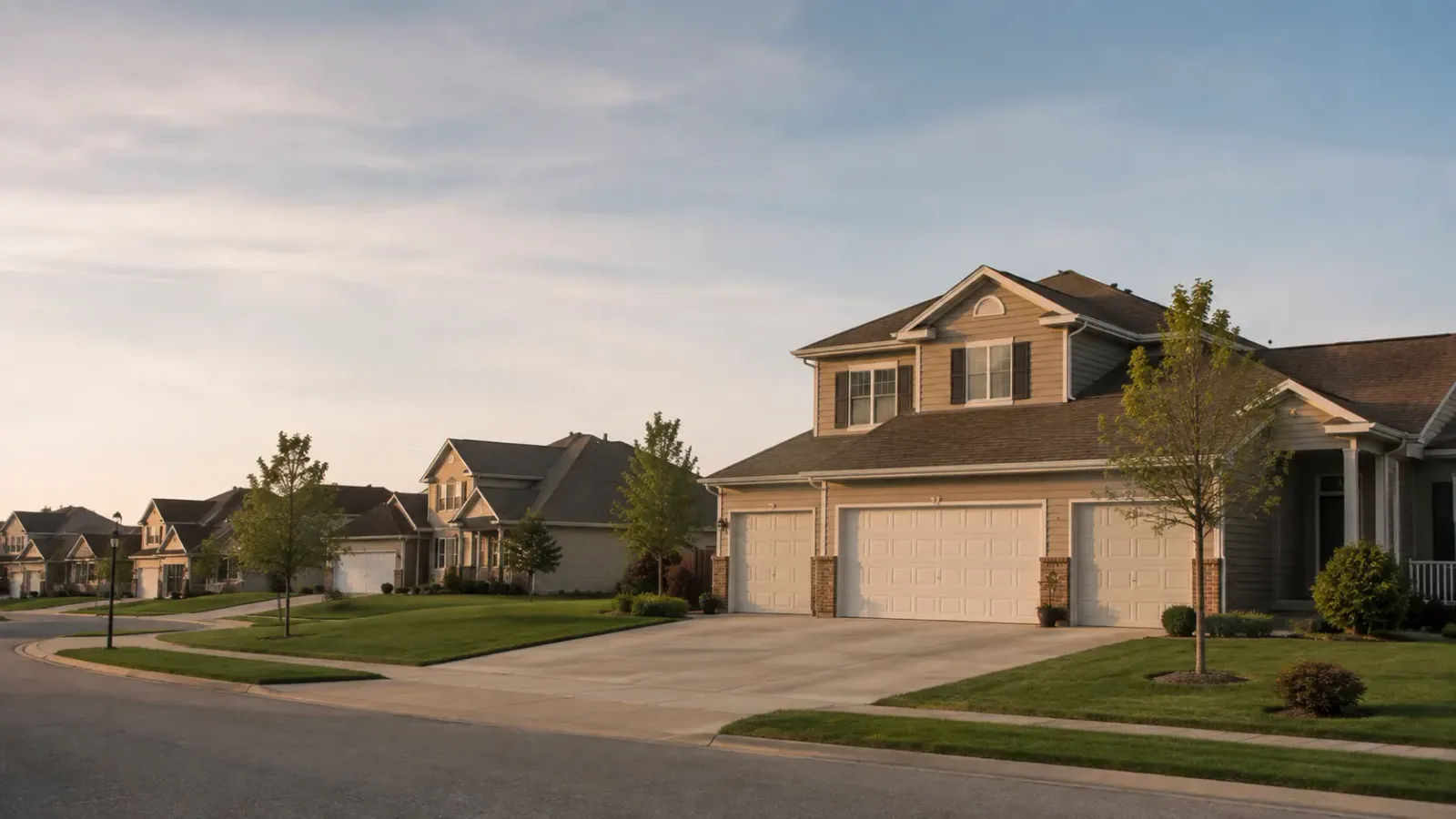
Naperville runs its own municipal electric utility, which is unusual for a city of nearly 150,000 and means outage reporting, service coordination, and any utility incentive programs go through the city rather than ComEd. The housing is dominated by the 1980s through 2000s growth that took Naperville from a town to one of the largest cities in the state, so the demand profile leans heavily toward capacity: those 200-amp panels are now decades old and full, and the households in them are adding EVs, finished basements, and home offices faster than the original design anticipated.
- Serving all 4 Naperville ZIP codes
- Naperville Electric Utility — not ComEd
- Permits through City of Naperville
- 22 miles from our partner electrician
KilowattBros is a free matching service. All electrical work is performed by independent, licensed contractors.
Licensed & insured
Work is carried out by licensed, insured electrical contractors — never by us.
Fast hand-off
Your request reaches a contractor the moment you submit it, not a queue.
One contractor
Not a shared lead resold to five companies who all call you at once.
Free, no obligation
Matching costs you nothing. Contractors pay us, and only after you book.
What the housing stock needs
Naperville homes, by the year they were built
Naperville runs its own municipal electric utility, which is unusual for a city of nearly 150,000 and means outage reporting, service coordination, and any utility incentive programs go through the city rather than ComEd. The housing is dominated by the 1980s through 2000s growth that took Naperville from a town to one of the largest cities in the state, so the demand profile leans heavily toward capacity: those 200-amp panels are now decades old and full, and the households in them are adding EVs, finished basements, and home offices faster than the original design anticipated. The historic downtown core is the exception, with a genuinely old and carefully preserved housing stock.
- Historic district and downtown1840–1940
- A well-preserved historic core with period wiring and preservation constraints on visible work.
- The growth decades1980–2005Most of Naperville
- The overwhelming majority of the city. 200-amp services now twenty to forty years old and increasingly full.
Neighbourhoods and subdivisions we cover
Naperville Historic District, Cress Creek, Ashbury, White Eagle, Saybrook, Naper Carriage Hill — and everywhere else in the 4 Naperville ZIP codes.
Ordered by what Naperville needs most
Electrical work we arrange in Naperville
Naperville is a newer-housing town. The wiring is generally sound and grounded, so this list is about adding capacity and circuits rather than replacing anything — EV charging, standby power, and finding room in a full panel.
EV Charger Installation
The strongest fit in the market. A 200-amp service, an attached garage and a short conduit run is close to the ideal case, and load management can avoid a service change entirely.
- Typical
- $700 – $2,200 installed
- Permit
- Required
- Duration
- Half a day for a standard attached-garage install
Electrical Panel Upgrade
Not an upgrade so much as more room. These panels are not obsolete, they are full — a subdivision panel laid out for the loads of its year runs out of breaker spaces, and a sub-panel often solves it for a fraction of a service change.
- Typical
- $2,200 – $4,800
- Permit
- Required
- Duration
- One day for a standard swap; two if the mast and grounding are replaced
Home Automation & Smart Home Wiring
The easiest era to work in. Neutrals are present in most switch boxes and the panel usually has the capacity for whatever gets added.
- Typical
- $450 – $6,000 depending on scope
- Permit
- Usually not
- Duration
- A day for device-level work; a week or more for structured wiring
Whole House Generator Installation
Very common in these subdivisions. Underground utilities mean fewer outages but longer ones, and the lots are laid out with room for a pad.
- Typical
- $6,500 – $16,000 installed
- Permit
- Required
- Duration
- Two to three days on site, plus lead time for permits and the gas meter
Whole House Rewiring
Almost never needed. If somebody is quoting a rewire on a house built after 1990, get a second opinion before you get a price.
- Typical
- $8,000 – $30,000+
- Permit
- Required
- Duration
- One to three weeks depending on size, access, and occupancy
Emergency Electrician
Less common here, and usually a specific failure — a failed AFCI, a damaged outdoor circuit, a tripped GFCI nobody can find — rather than an ageing-system problem.
- Typical
- $150 – $450 for the call-out and diagnosis
- Permit
- Usually not
- Duration
- Most emergency diagnostics resolve within one to three hours on site
Permits & utility
Who signs off on work in Naperville
Illinois licenses electrical contractors at the municipal level, not the state level. That means the rules, the fees and the inspection queue are Naperville’s — not DuPage or Will County’s, and not Illinois’.
Naperville is not served by ComEd. Naperville Electric Utility runs the distribution system here, which changes who schedules a service disconnect and who you call in an outage. Contractors from outside the area get this wrong routinely.
- Permit authority
- City of Naperville — Transportation, Engineering & Development
- Electric utility
- Naperville Electric Utility
- Gas utility
- Nicor Gas
- County
- DuPage & Will
- ZIP codes
- 60540, 60563, 60564, 60565
- Population
- 149,540
Report a power outage
(630) 420-6060Naperville Electric Utility
Billing and new service are a different number: (630) 420-6059.
This is the utility, not us — we cannot restore power. If you smell burning or see a downed line, call them first.
- Naperville operates its own municipal electric utility rather than being served by ComEd, unusual for a city of nearly 150,000 residents.
- The great majority of Naperville housing dates from the 1980–2005 growth period, so panels here are typically modern but full rather than obsolete.
- The Naperville Historic District around the downtown core preserves a substantially older housing stock with period wiring and preservation constraints.
Local context
What makes Naperville homes different
Naperville runs its own municipal electric utility, which is unusual for a city of nearly 150,000 and means outage reporting, service coordination, and any utility incentive programs go through the city rather than ComEd. The housing is dominated by the 1980s through 2000s growth that took Naperville from a town to one of the largest cities in the state, so the demand profile leans heavily toward capacity: those 200-amp panels are now decades old and full, and the households in them are adding EVs, finished basements, and home offices faster than the original design anticipated. The historic downtown core is the exception, with a genuinely old and carefully preserved housing stock.
Naperville housing by era
Historic district and downtown
1840–1940A well-preserved historic core with period wiring and preservation constraints on visible work.
The growth decades
1980–2005The overwhelming majority of the city. 200-amp services now twenty to forty years old and increasingly full.
Naperville at a glance
- County
- DuPage / Will
- Population
- 149,540
- ZIP codes
- 60540, 60563, 60564, 60565
- Electric utility
- Naperville Electric Utility
- Gas utility
- Nicor Gas
- Permits issued by
- City of Naperville — Transportation, Engineering & Development
Areas we cover
Naperville Historic District · Cress Creek · Ashbury · White Eagle · Saybrook · Naper Carriage Hill
- Naperville operates its own municipal electric utility rather than being served by ComEd, unusual for a city of nearly 150,000 residents.
- The great majority of Naperville housing dates from the 1980–2005 growth period, so panels here are typically modern but full rather than obsolete.
- The Naperville Historic District around the downtown core preserves a substantially older housing stock with period wiring and preservation constraints.
What Naperville houses actually need
Naperville is not an old-wiring town, and almost every quote you get should reflect that. Roughly speaking the city went from 22,000 people in 1970 to nearly 150,000 today, and the overwhelming bulk of the housing stock — Cress Creek, Ashbury, White Eagle, Saybrook, Naper Carriage Hill and the rest of the subdivisions across the 60540, 60563, 60564 and 60565 ZIP codes — went up between about 1980 and 2005.
That has a specific consequence. Those homes were built with 200-amp services, grounded wiring throughout, and modern breaker panels. There is nothing wrong with any of it. If somebody arrives at a house in White Eagle and starts talking about rewiring, you are being sold something.
What those houses have run out of is room.
Full is not the same as obsolete
This is the single most useful distinction for a Naperville homeowner, and it is worth a lot of money.
A panel can be at the end of its life for two completely different reasons. It can be obsolete — a fuse box, a Federal Pacific Stab-Lok, a Zinsco, a 60-amp service. Those need replacing, and the argument is over when, not whether. Or it can simply be full — every breaker position occupied, no room for the circuit you want to add, while the service itself is perfectly adequate.
Naperville is overwhelmingly the second case. A 200-amp panel installed in 1998 was laid out for the loads of 1998: no EV, no induction range, no heat pump, no finished basement with its own circuits, no home office with a dedicated feed. Twenty-five years of adding things has consumed the positions, not the capacity.
The fix for a full panel is usually a sub-panel — a second, smaller panel fed from the main one, giving you the positions you need without touching the service entrance, the meter, or the utility. That is typically $900 to $2,000. Replacing the whole service is $2,200 to $4,800 and, in most Naperville houses, is not what the problem calls for.
Ask directly: is my service undersized, or is my panel out of positions? A straight answer to that question tells you which quote is honest.
The municipal utility, and why it matters here
Naperville does not buy its electricity distribution from ComEd. The city runs its own electric utility — which for a city of this size is genuinely unusual, and which changes the mechanics of any job that touches the service.
Three practical differences:
Outages go to the city. Not to ComEd's number, not to ComEd's map. If your power is out and you are on hold with ComEd, you are on hold with the wrong company.
Service disconnects are scheduled with the city. Replacing a panel or a meter socket means the power comes off at the service point, and that appointment is made through the city's electric utility. This is the step that most often sets the calendar on a Naperville panel job — not the electrician's availability and not the permit.
Incentive programs are the city's. Any rebate or program relating to electrification is administered locally rather than through ComEd's statewide schemes, so ComEd-oriented advice found online may simply not apply to you.
None of this is difficult, but it does mean an electrician who works mostly in Elgin, Schaumburg or Hanover Park is operating in a different system when they cross into Naperville. Ask whether they have done service work here before.
EV charging is the strongest fit in this market
If there is one job that Naperville housing is close to ideal for, it is Level 2 EV charging.
The reason is structural: an attached garage, a 200-amp service, and usually a short conduit run from the panel to where the car sits. Compare that with a pre-war house in Elgin, where the service often has to be upgraded before a charger can even be discussed, and the run is long and awkward.
Expect roughly $700 to $2,200 installed for a standard attached-garage installation. The variables that move that number are run length, whether the conduit is surface-mounted or fished, and whether the panel has a spare position — which brings us back to the previous section.
One thing worth knowing before you get quoted: if the panel is full, you do not automatically need a service upgrade to charge a car. Load management — a device that prevents the charger and another large appliance from drawing at full tilt simultaneously — can frequently avoid a service change entirely. It is not right for every house, but it is right often enough that you should hear the option before you agree to a $4,000 job.
Permits, and the one exception to the "new housing" rule
Electrical permits in Naperville go through the City of Naperville's Transportation, Engineering & Development department at 400 South Eagle Street. Anything that adds a circuit or replaces service equipment needs one, plus an inspection: panel replacements, sub-panels, EV chargers, generator transfer switches. Swapping a failed device on an existing circuit generally does not.
The exception to everything above is the Naperville Historic District around the downtown core. That housing is genuinely old — the city's first settlement dates to the 1830s — and it is carefully preserved. Homes there carry the same issues as pre-war stock anywhere: period wiring, ungrounded circuits, service equipment that has been added to repeatedly rather than replaced. They also carry preservation constraints on externally visible work, which can affect where a new mast or meter is allowed to go.
If your house is in the historic district, most of this page does not describe it. Read the Elgin page instead — the housing has far more in common.
What we do
KilowattBros is a free matching service, not an electrical contractor. We do not do the work, quote it, or supervise it. Your request goes to one licensed, insured electrician covering Naperville — not to five companies who will all call you within the hour. The homeowner pays nothing; the contractor pays us when a request becomes a booked job, which is why we have no reason to send you someone who cannot do the work.
Before you get a quote
Costs and comparisons for Naperville homeowners
Ordered by what Naperville housing actually needs. Illinois figures, not national averages.
- Guide
EV Charger Installation Cost in Illinois
Level 2 home charger pricing for the Chicago suburbs, why the run to your panel matters more than the charger, and when you can avoid a panel upgrade.
Read it - Guide
Electrical Panel Upgrade Cost in Illinois
Real Illinois pricing for a 100 to 200 amp panel upgrade, what drives the number up, and how to read a quote. Chicago-area figures, not national averages.
Read it - Comparison
100 vs 200 Amp Panel: Which Do You Actually Need?
The honest answer depends on what you burn gas for. Here is how to work it out before anyone quotes you.
Read it - Comparison
Portable vs Standby Generator for an Illinois Home
If your basement has a sump pump, this comparison has already answered itself.
Read it
FAQ
Electrical work in Naperville — questions
Do I need a permit for electrical work in Naperville?
For anything that replaces service equipment or adds a circuit — a panel replacement, an EV charger, a generator transfer switch — yes, and an inspection with it. Permits in Naperville go through City of Naperville — Transportation, Engineering & Development. Straightforward repairs to existing devices generally do not need one. Skipping a permit tends to surface at resale or during an insurance claim, which is the expensive way to find out.
Who is the electric utility in Naperville?
Naperville Electric Utility — Naperville runs its own municipal electric utility and is not a ComEd town. It matters more than it sounds: the disconnect and reconnect for a panel replacement is scheduled through them, not ComEd, and an outage is reported to them. Contractors based outside the area assume ComEd and lose a day to it.
What electrical work do Naperville homes usually need?
Most of Naperville's housing dates from the 1980–2005 period. The overwhelming majority of the city. 200-amp services now twenty to forty years old and increasingly full. That is the pattern here, though any individual house can differ — the year on the deed predicts the problem better than the size or the price does.
How fast can an electrician get to Naperville?
Naperville is about 22 miles from our partner electrician's base in Elgin, so same-day is realistic for emergencies and same-hour is often possible during business hours. Scheduled work runs days to weeks out, with permit review usually setting the timeline rather than the electrician's diary.
Is KilowattBros an electrical contractor?
No. We are a free matching service and we do not perform electrical work, provide estimates, or supervise projects. Your request goes to one licensed, insured contractor who covers Naperville — not to five companies who will all call you. Licensing, pricing, scheduling, warranty and workmanship are entirely the contractor's.
How do I check an electrician is licensed in Naperville?
Ask for the license number and a certificate of insurance before any work starts — you are entitled to both, and hesitation is informative. Because Illinois licenses electrical contractors municipally, verification runs through City of Naperville — Transportation, Engineering & Development rather than a state register.
Does ComEd serve Naperville?
No. Naperville operates its own municipal electric utility, which is unusual for a city of nearly 150,000 people. In practice it means three things: you report an outage to the city rather than to ComEd, any service disconnect for a panel replacement is scheduled through the city's electric utility, and any utility-side incentive program is the city's rather than ComEd's. Contractors who work mainly in ComEd territory sometimes call the wrong number and lose a day to it.
Why does my Naperville panel have no space left if it is only 25 years old?
Because it was sized for the loads of its year, not for yours. A 200-amp panel installed in 1998 was laid out for a house with one television, no EV, no induction range, and an unfinished basement. The service size is usually still adequate — what has run out is physical breaker positions. That distinction matters financially: a sub-panel to add positions is typically $900 to $2,000, while a full service replacement is $2,200 to $4,800. Get someone to tell you which one you actually need before you accept a quote for the larger job.
Do I need a permit to install an EV charger in Naperville?
Yes. A Level 2 charger is a new dedicated circuit, and new circuits require an electrical permit and an inspection through the City of Naperville's Transportation, Engineering & Development department. Because the city runs its own electric utility, anything touching the service itself is also coordinated with them. The permit is not the expensive part or the slow part — it is skipping it that causes problems, usually at resale or during an insurance claim.
Coverage
Where Naperville sits in our service area
We cover 16 towns across the northwest suburbs and Fox Valley. Naperville borders Aurora, Batavia, Geneva, and we cover those too.
If you are outside Naperville the form still works — it accepts any town, and that is how we decide where to expand next.
Next step
Get matched with an electrician in Naperville
One short form. It goes straight to a licensed, insured contractor who works in your area — not into a national lead pool that resells it to five companies.
Or call +1 (727) 477-1356KilowattBros is a free matching service. All electrical work is performed by independent, licensed contractors.