Chicago Metro · 16 towns covered
Emergency Electrician in the Chicago suburbs
Some electrical problems can wait for a scheduled appointment. Others are telling you the house is actively unsafe. Knowing which is which matters, because the difference between a nuisance breaker and a failing service neutral is the difference between an inconvenience and a fire.
- $150 – $450 for the call-out and diagnosis typical across the metro
- Licensed, insured contractors
- Northwest suburbs & Fox Valley
- 16 towns covered
KilowattBros is a free matching service. All electrical work is performed by independent, licensed contractors.
Licensed & insured
Work is carried out by licensed, insured electrical contractors — never by us.
Fast hand-off
Your request reaches a contractor the moment you submit it, not a queue.
One contractor
Not a shared lead resold to five companies who all call you at once.
Free, no obligation
Matching costs you nothing. Contractors pay us, and only after you book.
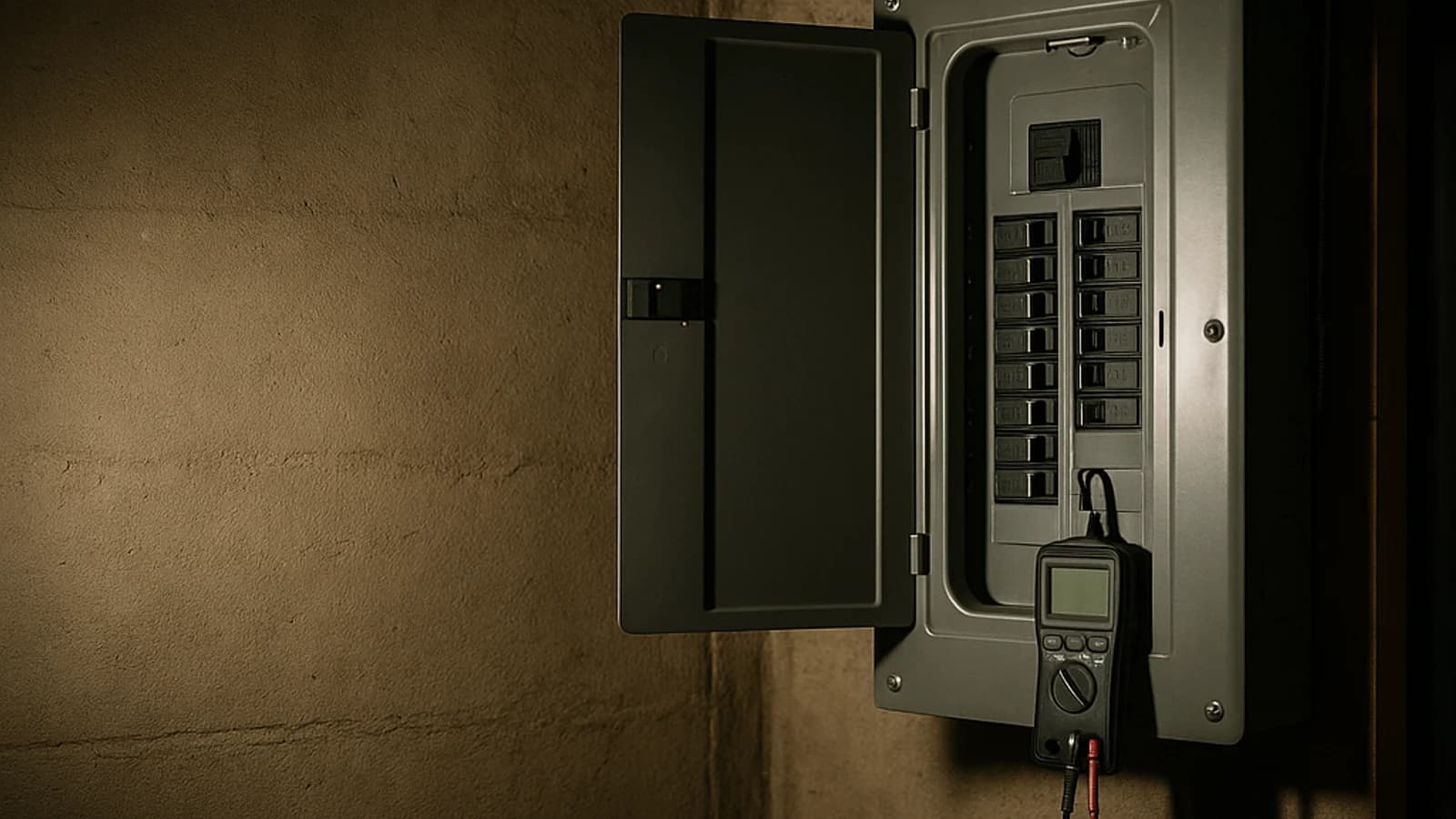
Emergency Electrician in the Chicago suburbs: the short answer
- Typical cost
- $150 – $450 for the call-out and diagnosis
- Emergency Electrician in the Chicago suburbs typically costs $150 – $450 for the call-out and diagnosis. The figure depends on your home's existing wiring and access.
- How long it takes
- Most emergency diagnostics resolve within one to three hours on site
- Most emergency diagnostics resolve within one to three hours on site. Permit review and inspection scheduling usually set the calendar timeline rather than the electrician's availability.
- Permit required
- Usually not
- Emergency Electrician on existing equipment generally does not require a permit. Adding a circuit or replacing service equipment does.
Figures are typical ranges for planning, not a quote. Only a licensed electrician who has seen the job can price it.
Cost
What emergency electrician costs around Chicago
These are Illinois figures, not national averages. Labour and permit costs in the Chicago metro run above the national median, and a page quoting a US-wide number will consistently under-estimate what you are actually quoted here.
| Scope of work | Typical range | What moves the price |
|---|---|---|
| After-hours or weekend diagnostic call-outUsually credited toward the repair if you proceed. | $150 – $350 | Usually credited toward the repair if you proceed. |
| Standard hourly rate, business hoursChicago-metro residential rate. Often a one-hour minimum. | $90 – $165 / hour | Chicago-metro residential rate. Often a one-hour minimum. |
| After-hours, overnight, and holiday rateTime-and-a-half to double is standard across the trade. | $160 – $300 / hour | Time-and-a-half to double is standard across the trade. |
| Tracing and repairing a dead circuitWide band — a loose backstab is quick, a buried splice is not. | $180 – $600 | Wide band — a loose backstab is quick, a buried splice is not. |
| Failed main breaker replacementDepends heavily on panel brand and breaker availability. | $350 – $900 | Depends heavily on panel brand and breaker availability. |
| Burned or arcing outlet, single deviceHigher if the branch circuit conductors are damaged back in the wall. | $180 – $400 | Higher if the branch circuit conductors are damaged back in the wall. |
| Storm damage to mast, weatherhead, or service dropRequires utility coordination and an inspection before reconnect. | $800 – $3,000 | Requires utility coordination and an inspection before reconnect. |
Ranges reflect typical Chicago-area pricing and are for planning only — they are not a quote. Actual cost depends on your home, your existing wiring, and the permit requirements in your municipality. Only a licensed electrician who has seen the job can price it.
Do you actually need this?
Signs it is time for emergency electrician
None of these on their own proves you need work done. Several together usually does. If you recognise two or more, it is worth having a licensed electrician look before it becomes an emergency call.
- A burning, fishy, or hot-plastic smell near outlets or the panel
- Visible sparks, scorch marks, or discolouration on a device
- An outlet, switch, or breaker that is hot to the touch
- Half the house has power and half does not
- Lights across the house brighten and dim in opposite pairs
- A breaker that trips again immediately after being reset
- Buzzing or crackling from the panel
- Water reaching the panel, a circuit, or the meter
What a proper job includes
What to expect from a emergency electrician
Use this as a checklist when you compare quotes. A quote that is noticeably cheaper than the others is usually missing something on this list — most often the permit, the inspection, or the grounding.
- Timeline
- Most emergency diagnostics resolve within one to three hours on site
- Permit
- Usually not required
- 01Make-safe first: isolate the affected circuit and de-energise the hazard
- 02Systematic diagnosis rather than parts-swapping
- 03Voltage, load, and continuity testing to find the actual fault
- 04Thermal check of the panel and affected devices
- 05Permanent repair, or a documented temporary make-safe with a return date
- 06Written record of the fault for insurance where damage occurred
Permits & code
What the rules actually require
Emergency repairs to existing equipment generally do not need a permit. Replacing service equipment — the mast, meter socket, or the panel itself — does, even when the work is urgent. In practice the electrician makes the house safe first and pulls the permit for the equipment replacement immediately after.
Lights brightening and dimming in opposite halves of the house is the classic signature of a lost service neutral. That is a utility-side problem as often as a house-side one, and it can destroy appliances within minutes. Call the utility and an electrician, and shut off the main if you can do it safely.
A breaker that trips repeatedly is doing its job. Repeatedly resetting it, or replacing it with a larger one, removes the protection without fixing the fault — a common cause of concealed wall fires.
ComEd owns the service drop, the meter, and everything upstream. The homeowner owns the mast, weatherhead, meter socket, and everything downstream. Storm damage frequently involves both, which is why these calls need utility coordination.
Pick your town for local detail
Emergency Electrician by town
16 towns across the northwest suburbs and Fox Valley. Each town page covers emergency repairs alongside its own permit authority, utility and housing history — because a 1962 Streamwood ranch and a 2003 Huntley build have almost nothing in common electrically.
- ElginKane County
- South ElginKane County
- StreamwoodCook County
- CarpentersvilleKane County
- West DundeeKane County
- BartlettCook County
- Hanover ParkCook County
- Hoffman EstatesCook County
- St. CharlesKane County
- AlgonquinMcHenry County
- SchaumburgCook County
- GenevaKane County
- HuntleyMcHenry County
- BataviaKane County
- AuroraKane County
- NapervilleDuPage County
Go deeper
What emergency electrician costs, in detail
Illinois figures, the trade-offs, and what separates a complete quote from a cheap one.
FAQ
Emergency Electrician — questions
What counts as a real electrical emergency?
Anything involving smoke, a burning smell, visible arcing, scorched devices, hot outlets or panel components, water at the panel, or a downed service wire. Also lights that dim and brighten in opposite halves of the house, which usually indicates a lost neutral and can destroy appliances. Those need a call now, not an appointment next week.
What should I do before the electrician arrives?
If you can safely reach the panel, switch off the affected circuit — or the main breaker if the problem is at the panel itself. Unplug electronics on the affected circuits. Do not run water near the panel. If you smell burning and cannot locate it, or if there is any smoke, leave the house and call 911 first.
How fast can someone actually get here?
For genuine emergencies in the northwest suburbs and Fox Valley, same-day is realistic and same-hour is often possible during business hours. Overnight and holiday response depends on who is on call. When you submit a request marked as an emergency, it goes out immediately rather than sitting in a queue.
Why does one breaker keep tripping?
Three usual causes: too much load on the circuit, a short between conductors, or a ground fault. An AFCI breaker also trips on arcing, which is what it is designed to catch. A breaker that trips instantly on reset with nothing plugged in points to a fault in the wiring itself and should not be reset again until it has been traced.
Is there an emergency electrician near me at night?
Yes — after-hours coverage across the northwest suburbs is normal in this trade, though you pay a premium for it, typically time-and-a-half to double the standard hourly rate. If the situation is a genuine safety hazard, that premium is worth paying rather than waiting until morning.
Do I pay for the call-out even if nothing is wrong?
Generally yes — you are paying for a licensed electrician's time and diagnosis, typically $150 to $350 after hours. Most contractors credit that against the repair if you go ahead with the work. Confirm how the diagnostic fee is handled before the visit so there is no surprise.
Half my house lost power but no breakers tripped. What is that?
That pattern usually means one of the two 120-volt legs feeding the house has been lost — at the main breaker, at the meter, or on the utility's side. It is not a normal fault and it should not be ignored, because the surviving leg can end up carrying unbalanced voltage that damages appliances. Shut off the main if you safely can, and get it looked at immediately.
Next step
Get matched with a licensed electrician
One short form. It goes straight to a licensed, insured contractor who works in your area — not into a national lead pool that resells it to five companies.
Or call +1 (727) 477-1356KilowattBros is a free matching service. All electrical work is performed by independent, licensed contractors.