Chicago Metro · 16 towns covered
EV Charger Installation in the Chicago suburbs
A Level 2 charger turns overnight charging from a 40-hour problem into an 8-hour one. The install itself is straightforward — a dedicated 240-volt circuit, a properly sized breaker, and a hardwired unit or a NEMA 14-50 receptacle — but two things decide the price: how far the garage is from the panel, and whether the existing service has the capacity to add the load at all.
- $700 – $2,200 installed typical across the metro
- Permitted and inspected
- Northwest suburbs & Fox Valley
- 16 towns covered
KilowattBros is a free matching service. All electrical work is performed by independent, licensed contractors.
Licensed & insured
Work is carried out by licensed, insured electrical contractors — never by us.
Fast hand-off
Your request reaches a contractor the moment you submit it, not a queue.
One contractor
Not a shared lead resold to five companies who all call you at once.
Free, no obligation
Matching costs you nothing. Contractors pay us, and only after you book.
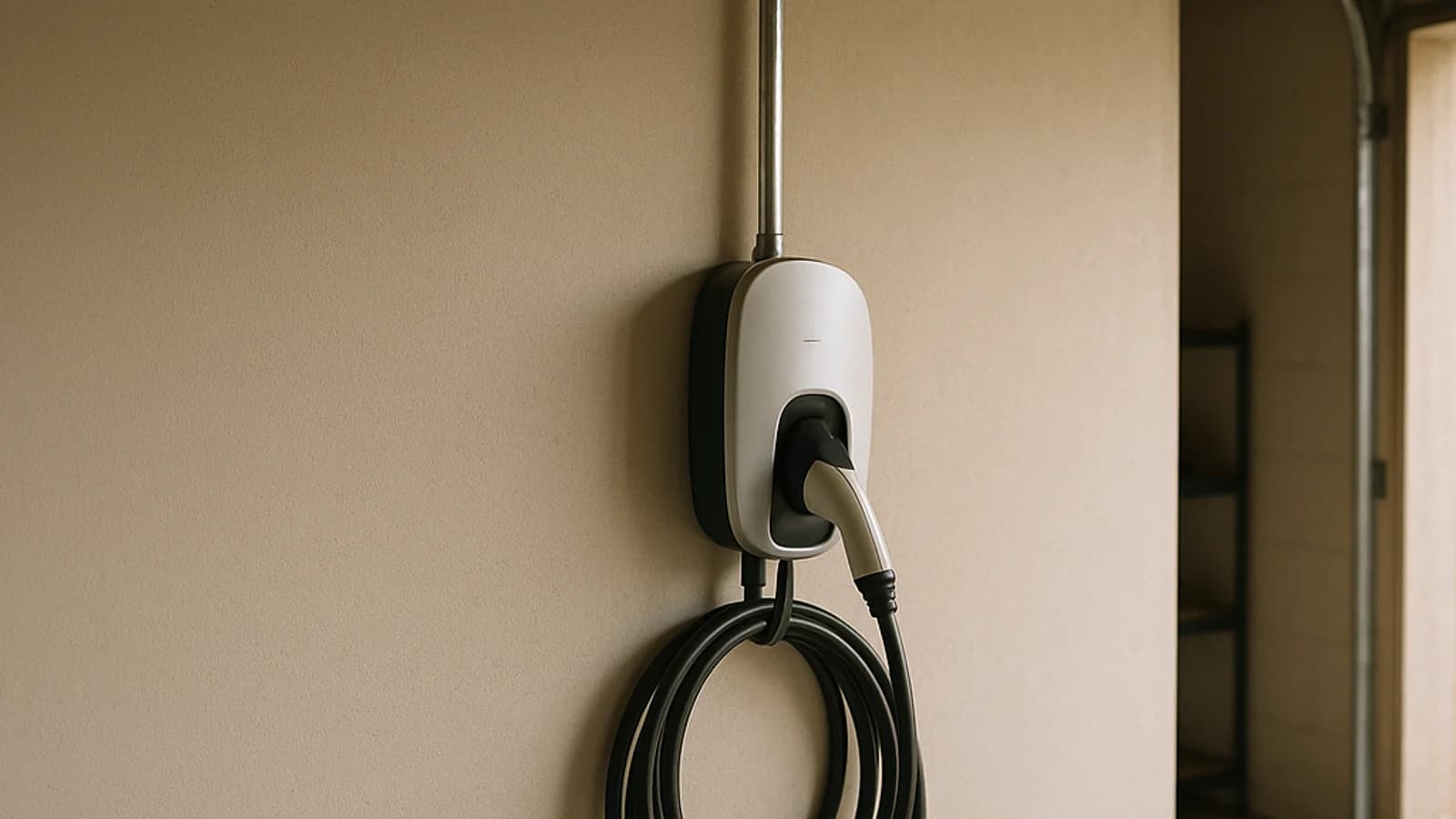
EV Charger Installation in the Chicago suburbs: the short answer
- Typical cost
- $700 – $2,200 installed
- EV Charger Installation in the Chicago suburbs typically costs $700 – $2,200 installed. The figure depends on your home's existing wiring and access.
- How long it takes
- Half a day for a standard attached-garage install
- Half a day for a standard attached-garage install. Permit review and inspection scheduling usually set the calendar timeline rather than the electrician's availability.
- Permit required
- Yes
- EV Charger Installation requires a permit and inspection in every municipality we cover. Your electrician normally pulls it.
Figures are typical ranges for planning, not a quote. Only a licensed electrician who has seen the job can price it.
Cost
What EV charger installation costs around Chicago
These are Illinois figures, not national averages. Labour and permit costs in the Chicago metro run above the national median, and a page quoting a US-wide number will consistently under-estimate what you are actually quoted here.
| Scope of work | Typical range | What moves the price |
|---|---|---|
| Charger mounted on the wall shared with the panelShort conduit run. The best case, and fairly common in attached garages. | $700 – $1,100 | Short conduit run. The best case, and fairly common in attached garages. |
| Typical attached-garage install, 20–50 ft runThe most common scenario in Fox Valley subdivisions. | $1,100 – $1,800 | The most common scenario in Fox Valley subdivisions. |
| Detached garage, trenched feederTrenching and a sub-panel dominate the cost, not the charger. | $2,500 – $6,000 | Trenching and a sub-panel dominate the cost, not the charger. |
| NEMA 14-50 receptacle instead of hardwired unitRequires GFCI protection under current code, which adds cost. | $600 – $1,300 | Requires GFCI protection under current code, which adds cost. |
| Load management device (avoids a panel upgrade)Often cheaper than upgrading the service. Worth pricing both ways. | $400 – $900 added | Often cheaper than upgrading the service. Worth pricing both ways. |
| Panel upgrade first, where capacity is shortThe single biggest variable in an EV charger quote. | +$2,200 – $4,800 | The single biggest variable in an EV charger quote. |
| Permit and inspectionVaries by municipality; some Fox Valley villages are at the low end. | $60 – $250 | Varies by municipality; some Fox Valley villages are at the low end. |
Ranges reflect typical Chicago-area pricing and are for planning only — they are not a quote. Actual cost depends on your home, your existing wiring, and the permit requirements in your municipality. Only a licensed electrician who has seen the job can price it.
Do you actually need this?
Signs it is time for EV charger installation
None of these on their own proves you need work done. Several together usually does. If you recognise two or more, it is worth having a licensed electrician look before it becomes an emergency call.
- Charging on a standard 120-volt outlet adds only 3–5 miles of range per hour
- The panel has no free double-pole breaker spaces
- The garage is detached or more than 50 feet from the panel
- The service is 100 amps and already carries central air
- A second EV is coming and one charger will not cover both
What a proper job includes
What to expect from a EV charger installation
Use this as a checklist when you compare quotes. A quote that is noticeably cheaper than the others is usually missing something on this list — most often the permit, the inspection, or the grounding.
- Timeline
- Half a day for a standard attached-garage install
- Permit
- Required
- 01Load calculation to confirm the service can carry a continuous 240-volt load
- 02Dedicated circuit sized at 125% of the charger's continuous rating per NEC 625.41
- 03Permit, rough inspection where required, and final inspection
- 04Conduit or cable run, properly supported and protected where exposed
- 05Hardwired connection or GFCI-protected receptacle per NEC 625.54
- 06Charger mounted at a workable height with cable management
- 07Commissioning, app pairing, and a live charge test before the electrician leaves
Permits & code
What the rules actually require
A new 240-volt branch circuit requires a permit and inspection everywhere in the Chicago metro. This matters beyond compliance: utility and manufacturer rebate programs generally require proof of a permitted, inspected installation, so skipping the permit can cost more in lost rebate than the permit fee.
NEC 625.41 requires the circuit to be sized at 125% of the charger's continuous output — a 48-amp charger needs a 60-amp circuit, not a 50-amp one. This is the most common sizing mistake on cheap installs.
NEC 625.54 requires GFCI protection for receptacle-fed EV connections. That is a real cost difference between a hardwired unit and a NEMA 14-50 plug, and it is why hardwiring is often the better value at 40 amps and above.
Where service capacity is short, an EVEMS load-management device under NEC 750 can let you add charging without upgrading the panel. Always price this against a panel upgrade — sometimes the upgrade is the better long-term spend, sometimes it is half the cost to avoid it.
Pick your town for local detail
EV Charger Installation by town
16 towns across the northwest suburbs and Fox Valley. Each town page covers ev chargers alongside its own permit authority, utility and housing history — because a 1962 Streamwood ranch and a 2003 Huntley build have almost nothing in common electrically.
- ElginKane County
- South ElginKane County
- StreamwoodCook County
- CarpentersvilleKane County
- West DundeeKane County
- BartlettCook County
- Hanover ParkCook County
- Hoffman EstatesCook County
- St. CharlesKane County
- AlgonquinMcHenry County
- SchaumburgCook County
- GenevaKane County
- HuntleyMcHenry County
- BataviaKane County
- AuroraKane County
- NapervilleDuPage County
Go deeper
What ev charger installation costs, in detail
Illinois figures, the trade-offs, and what separates a complete quote from a cheap one.
FAQ
EV Charger Installation — questions
Do I need a panel upgrade to install an EV charger?
Not always. It comes down to a load calculation on your existing service. Many 200-amp homes absorb a 48-amp charger without trouble. A 100-amp service already running central air and an electric dryer usually cannot, and then you choose between upgrading the panel or fitting a load-management device that throttles charging when the house draws heavily.
Tesla Wall Connector or a universal Level 2 charger?
If every vehicle in the household is a Tesla, the Wall Connector is cheaper and cleanest. If there is any chance of a non-Tesla EV in the next few years, a J1772 or NACS-with-adapter unit from Emporia, ChargePoint, or Wallbox gives you more resale flexibility. The installation labour is nearly identical either way.
How long does an EV charger installation take?
A standard attached-garage install on a wall near the panel is a half-day job. Detached garages requiring a trench and a sub-panel run one to three days depending on ground conditions and how quickly the village schedules inspection.
Can I install a Level 2 charger myself?
Illinois municipalities require a licensed electrician to pull the permit for a new 240-volt branch circuit, and an unpermitted install typically disqualifies you from utility and manufacturer rebates. It also creates a disclosure problem at resale. The circuit is carrying 40 to 60 amps continuously for hours at a time — this is not the DIY project to learn on.
Is there a rebate for home EV charger installation in Illinois?
Program terms change frequently, so confirm what is currently open before you buy. Historically both utility and state-level programs in Illinois have offered incentives on Level 2 home charging, and they consistently require a permitted, inspected install by a licensed electrician along with itemised invoices. Keep the permit and the final inspection record.
How fast will a Level 2 charger actually charge my car?
A 40-amp Level 2 charger delivers roughly 25 to 30 miles of range per hour, so a typical overnight window fully covers daily driving for nearly every household. A 120-volt outlet delivers 3 to 5 miles per hour, which is the reason most EV owners stop tolerating it within the first month.
Should I get a 50-amp or a 60-amp circuit?
Size for the charger you will own in five years, not the one in the box. The wire and conduit are the expensive part to redo, and the difference between running 6 AWG and 4 AWG on installation day is small. If the panel can carry it, a 60-amp circuit supporting a 48-amp charger is the more future-proof choice.
Next step
Get matched with a licensed electrician
One short form. It goes straight to a licensed, insured contractor who works in your area — not into a national lead pool that resells it to five companies.
Or call +1 (727) 477-1356KilowattBros is a free matching service. All electrical work is performed by independent, licensed contractors.