Cost guide
What it costs to rewire a house in Illinois
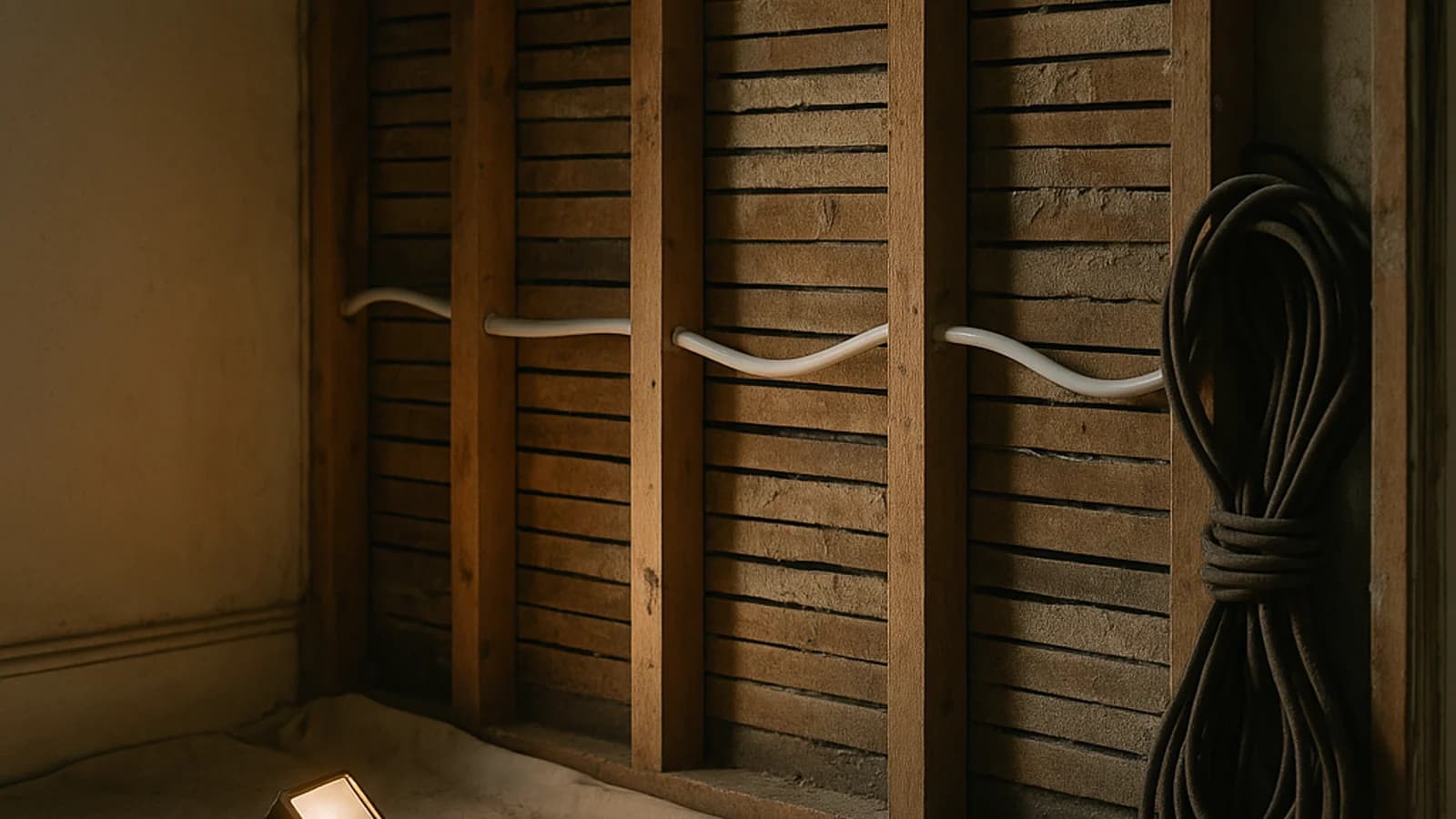
Rewiring is the largest electrical project a house will ever have, and it is the one where homeowners are most likely to be quoted for more work than they need. Two claims in particular are worth interrogating: that knob-and-tube must always be removed, and that aluminium branch wiring requires a full rewire. Neither is reliably true.
What is true is that access, not square footage, sets the price. A 2,400 square foot house with a full basement and a walkable attic can cost less to rewire than a 1,500 square foot plaster-walled foursquare with balloon framing — which is why so many Elgin, Geneva and West Dundee homeowners get quotes that look wrong for the size of the house.
| Scope of work | Typical range | What moves the price |
|---|---|---|
| Partial rewire, knob-and-tube on affected circuits onlyCommon where K&T survives in only part of the house. | $4,000 – $12,000 | Common where K&T survives in only part of the house. |
| Full rewire, 1,000–1,500 sq ft single storeyIncludes a new panel in most cases. | $8,000 – $16,000 | Includes a new panel in most cases. |
| Full rewire, 2,000–2,800 sq ft two storeySecond-storey access is the dominant cost driver. | $15,000 – $28,000 | Second-storey access is the dominant cost driver. |
| Aluminium branch wiring remediationCOPALUM or AlumiConn at every device. Accepted by most insurers. | $2,500 – $8,000 | COPALUM or AlumiConn at every device. Accepted by most insurers. |
| Plaster and drywall repair afterwardsFrequently quoted separately. Establish who owns it, in writing. | $2,000 – $8,000 | Frequently quoted separately. Establish who owns it, in writing. |
| Panel replacement as part of the rewireNearly always done at the same time, and should be. | $2,200 – $4,800 | Nearly always done at the same time, and should be. |
Ranges reflect typical Chicago-area pricing and are for planning only — they are not a quote. Actual cost depends on your home, your existing wiring, and the permit requirements in your municipality. Only a licensed electrician who has seen the job can price it.
Five generations of wiring, and which ones matter
Age alone does not make wiring dangerous. What matters is whether there is a ground path, whether the insulation has survived, and whether the terminations stay tight. Sorting your house into the right band is the first step in knowing whether you are looking at a $3,000 problem or a $25,000 one.
Knob-and-tube: when it genuinely has to go
Knob-and-tube was designed to shed heat into open air. It has no ground conductor, and its rubber-and-cloth insulation embrittles over decades. Intact, undisturbed, and not buried, it can still be serviceable — plenty of it is.
The problem is that hardly any of it is undisturbed. Two waves of attic insulation retrofits, in the 1970s and again in the 2000s, buried enormous amounts of knob-and-tube in blown-in insulation across suburban Chicago. That traps heat against conductors with no ground path, and it is the specific combination that concerns insurers rather than the age of the wiring itself.
In practice the decision is usually made for you by your insurance carrier. Several writing in Illinois will not bind or renew a policy with active knob-and-tube. If yours will, and an electrician has assessed it as intact and unburied, a phased approach is a legitimate choice.
Aluminium wiring: the most over-quoted problem in the trade
Homes built roughly between 1965 and 1974 often have aluminium branch circuit wiring. Aluminium expands and contracts more than copper and oxidises at terminations, so connections loosen over time and generate heat. That is a genuine hazard and it does need addressing.
It does not need a rewire. The CPSC-recognised remediations — COPALUM crimps or AlumiConn connectors applied at every device — address the failure point directly, cost $2,500 to $8,000, and satisfy most insurers. If you have been quoted $20,000 to rewire a house because of aluminium wiring, get a second opinion that specifically prices remediation.
Settle the drywall question before work starts
This is the single most common source of dispute on rewiring projects. Some contractors patch to a paint-ready finish. Some leave neat, square openings for your own contractor. Some quote repair as a separate line, and some do not mention it at all until the walls are open.
In a plaster-and-lath house the repair can add $2,000 to $8,000, which is enough to change which quote was actually cheapest. Get it in writing before anyone starts cutting.
Whole House Rewiring in your town
Local permit authority, electric utility, and the housing eras that decide what your house actually needs.
All towns for rewiring